Who Counts? Religion, Inclusion, and Exclusion in the Bills of Mortality
by
Jessica Otis
2024-05-23On Wednesday August 30, 1665, the diarist Samuel Pepys ran into his parish clerk and asked how the plague was progressing within their parish. To his dismay, the clerk “told me it encreases much, and much in our parish.” Worst of all, the clerk admitted that the plague was so bad that he had falsified his weekly reports of parish plague deaths: “for, says he, there died nine this week, though I have returned but six.” Whether or not Pepys castigated the parish clerk in person, he recorded his condemnation of such “a very ill practice” in his diary. The numbers within the bills of mortality were a vital public health guide during plague outbreaks and it was imperative for them to be as accurate as possible.
In our last post, we explained how we used Tropy to organize photographs of bound bills into items, concluding with the export of the item metadata using the Tropy CSV Export plugin. This post covers the other part of the process of going from digital images to items in a datascribe item set. If you look at the workflow image, we’ll be describing work that takes place in the “Image Processing and CSV Creation” and “Omeka S Item Creation” areas.
Have you ever wondered how a complex project like Death by Numbers comes together? This post is the first in a series about the workflow that takes us from archival sources to transcriptions formatted for computational analysis. Let’s begin with digitization.
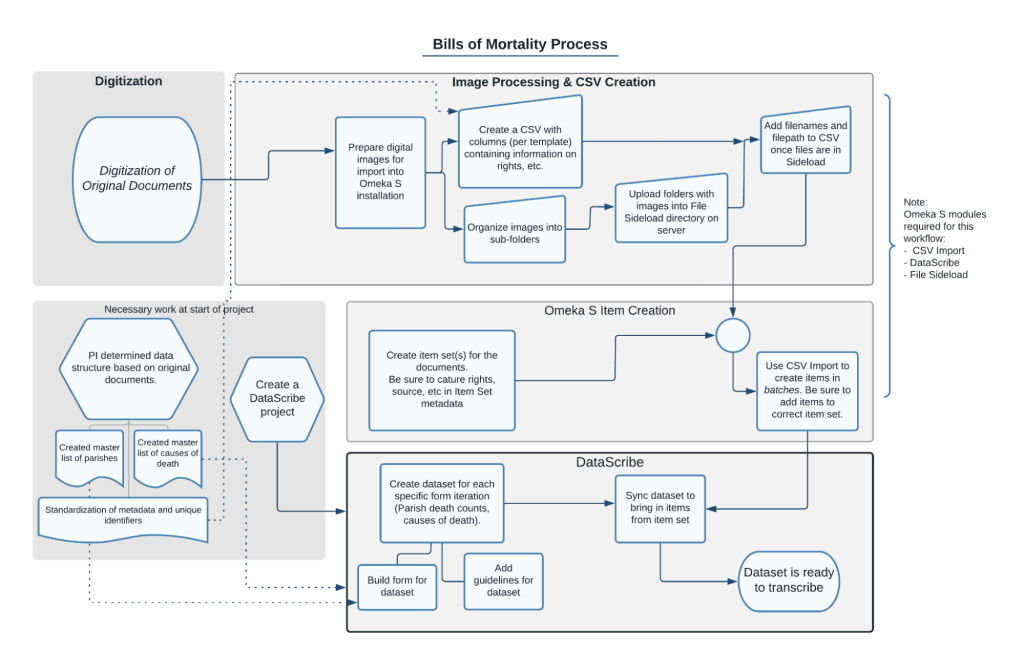
Figure 1. diagram of image preparation workflow showing process from digitization to image processing and CSV creation to omeka s item creation to datascribe transcription.