All Content

This is all content generated across the site through analysis, context, educational resources, and visualizations. You can also search the archives.

Strangled himself (being distracted): Messy Data and Suicides in the Bills of Mortality

By Emily Meyers

Content Warning: This post contains subject matter that some may find sensitive or disturbing, be advised. If uncomfortable with this topic, you may support Death By Numbers in other posts. This blog post will be a bit different than a few of our previous posts. Now that we have discussed our project workflow, we are going to begin to discuss the content of the Bills themselves. One thing that we immediately noticed on beginning this project is that suicides are reported on the Bills in a variety of ways that lead to more questions than answers regarding the weekly suicide rate in London.

How We Get Things Done: The Transcription Workflow

By Megan Brett , Dan Howlett

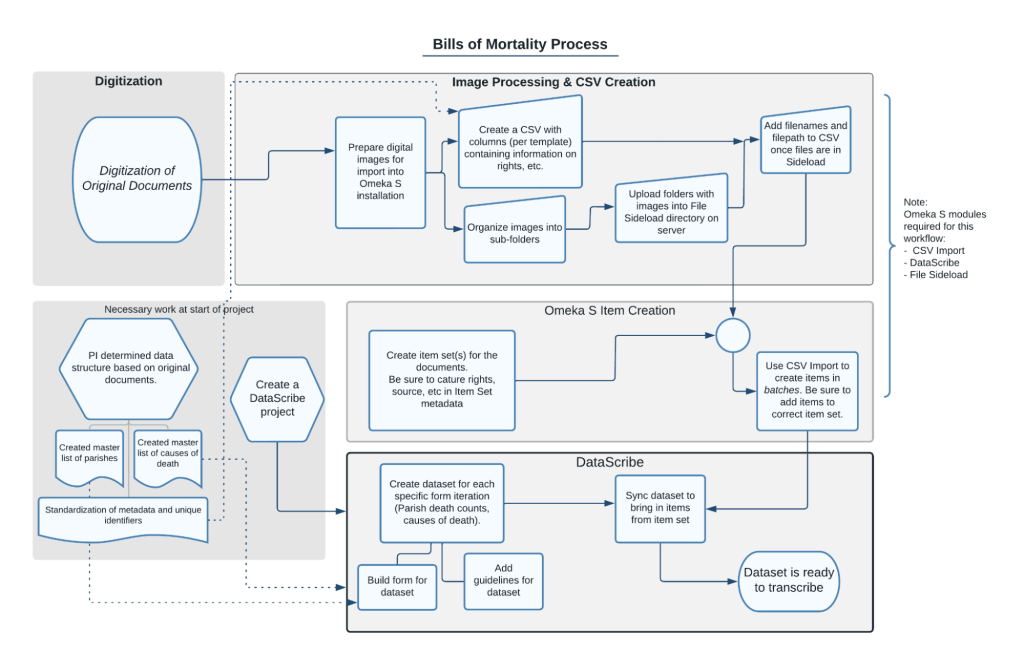
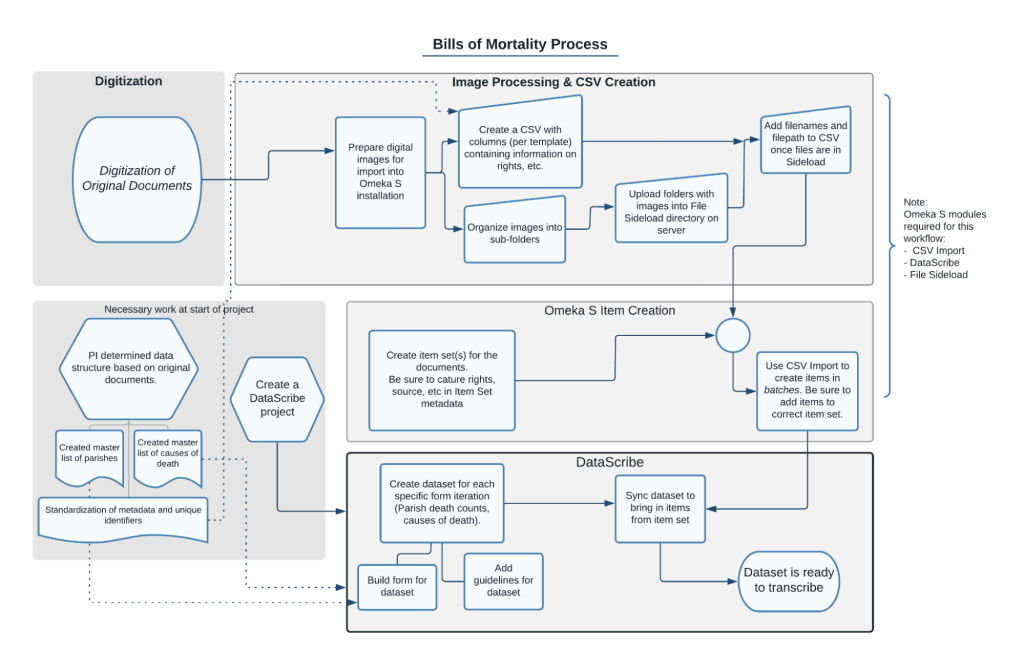
Figure 1. Bills of Mortality Workflow. Once items are added to DataScribe and the datasets are ready for transcription, the transcription workflow begins. The project owner can assign users one of two roles: reviewer or transcriber. Reviewers can edit all records and items, regardless of the item’s status. For Bills of Mortality, Reviewers include the staff members on the project and our Digital History Research Assistants. Transcribers can only edit records and items which are locked to them.

From Archival Sources to Computational Analysis, Part Two

By Megan Brett , Megan Mitchell

In our last post, we explained how we used Tropy to organize photographs of bound bills into items, concluding with the export of the item metadata using the Tropy CSV Export plugin. This post covers the other part of the process of going from digital images to items in a datascribe item set. If you look at the workflow image, we’ll be describing work that takes place in the “Image Processing and CSV Creation” and “Omeka S Item Creation” areas.

From Archival Sources to Computational Analysis, Part One

By Megan Brett , Megan Mitchell

Have you ever wondered how a complex project like Death by Numbers comes together? This post is the first in a series about the workflow that takes us from archival sources to transcriptions formatted for computational analysis. Let’s begin with digitization. Figure 1. diagram of image preparation workflow showing process from digitization to image processing and CSV creation to omeka s item creation to datascribe transcription. Digitization of Original Documents There are many ways historic documents become digital objects, and the BoM project is built on documents from a variety of sources.

7 Problems to Expect when You're Transcribing Historical Data and How to Avoid Them

By Dan Howlett , Emily Meyers

So you want to start transcribing data from historical documents? The task seems easy! However, there are quite a few issues that can pop up which can create problems for other parts of the project. Below are some of the expected errors our transcribers on Death By Numbers frequently run into and some tips on how to handle them. The job may sound intimidating with all the potential pitfalls, but we have suggested solutions from all the tips and tricks our team has picked up over the past few months.

A Parish By Any Other Name

By Megan Brett , Jessica Otis

The Bill of Mortality from Christmas week in 1664 reports that three people died in the parish of St Foster. But fifty years later, there were happily no Christmas deaths in the parish of St Vedast—or rather, the parish of “St Vedast alias Foster.” Because the parish of St Vedast is the parish of St Foster. Welcome to the complex world of early modern parish names. Given that our sources were published over the course of centuries, it’s hardly surprising that the names of some of the parishes in the bills changed over time.

"Within the Bills": EEBO and the Early Modern London Metropolis

By Jessica Otis

One of the more helpful digital databases for the study of early modern history is Early English Books Online (EEBO), which contains images of most of the surviving books printed in England between 1473 and 1700. It builds upon the cataloging work of 19th-century bibliographers and began its life as a collection of microfilm in the late 1930s and 1940s before being digitized at the turn of the twenty-first century.1 Because its focus is on books rather than broadsides or bills, EEBO only contains a small fraction of the early modern Bills of Mortality but a keyword search for the bills still turns up almost 500 results.

Parishes and Extra-Parochial Places

By Jessica Otis

The main organizational unit behind the London Bills of Mortality is the parish: a religious administrative unit usually consisting of one or more churches, their associated staff, and all Christians living within the geographical bounds of the parish. The parish clergy christened, married, and buried their parishioners and—starting in the sixteenth century—the parish clerk kept a register of those events. The burial numbers would eventually form the basis of the bills, with christenings added later.

Confusion of Calendars

By Emily Meyers , Jessica Otis

One of the first things a Bill of Mortality tells the reader is the date. The bill (partially) pictured below covers mortality data for the city of London, in the 3rd week of the current bills’ year, which ran from the 31st of December to the 7th of January in the year 1700 AD (from the Latin, Anno Domini, which was often translated into English as the Year of the Lord).

The London Bills of Mortality

By Dan Howlett , Jessica Otis

Plague epidemics were a recurring threat in late medieval and early modern Europe. While plague could and did strike anywhere, the most well-documented epidemics were often in cities. Responses varied across time and space, as city leaders and other political authorities attempted to avoid contagion, contain the sick, and understand the scope of the threat plague currently posed to their lives and their livelihoods. These responses included the creation of lists: lists of people sick with plague, lists of cities infected with plague, and–starting in the sixteenth century–lists of the number of people who had died of plague.